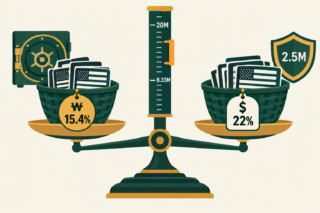
Foreign stock tax works differently from Korean domestic stocks. Gains on Korean-listed shares are tax-free for most retail investors, but any foreign stock profit above KRW 2.5 million per year triggers a 22% tax. Dividends add another 15.4% withholding on top. Because the two taxes hit at different times and through different processes, investors who do not manage them proactively often miss filing or miscalculate.
This stock tax guide breaks foreign stock tax into its two pillars: capital gains tax and dividend tax. You will find the calculation method, filing timeline, and practical ways to reduce the bill — everything you need before the May filing season.
Foreign Stock Tax Has Two Separate Tracks
There are two taxable events when you own foreign stocks. Capital gains when you sell at a profit, and dividends during the holding period. The two differ in rate, filing party, and timing, so it helps to treat them separately.
Capital gains tax applies to realized profit from selling foreign shares. The rate is 20% capital gains tax plus 2% local income tax, totaling 22%. The first KRW 2.5 million of annual gains is tax-free under the basic deduction, and any excess is taxed at 22%. While Korean-listed shares are generally exempt for non-major shareholders, foreign stock tax applies to every retail investor regardless of size.
Dividend tax applies to dividends received while holding the stock. The rate is 14% dividend tax plus 1.4% local income tax, totaling 15.4%, withheld automatically by the Korean broker. For most investors, that is the end of the story — but if total financial income (interest plus dividends) exceeds KRW 20 million in a year, the excess becomes subject to aggregated income tax at progressive rates.
| Category | Capital Gains Tax | Dividend Tax |
|---|---|---|
| Applies to | Realized gains on sale | Dividend income |
| Rate | 22% (incl. local tax) | 15.4% (withheld) |
| Deduction | KRW 2.5M annual | None |
| Filing | Self-file every May | Handled by broker |
| Additional | Gains & losses can be netted (Korea + overseas) | Aggregated if financial income exceeds KRW 20M |
Capital Gains Tax 22% — Use the KRW 2.5M Deduction
The stock tax formula for foreign capital gains is simple: (annual gains − KRW 2.5 million) × 22%. Gains are aggregated across all foreign stocks sold in the same calendar year. Since January 2020, the National Tax Service has allowed loss-offsetting between Korean and foreign stocks, and the KRW 2.5 million deduction applies to the combined total (NTS guide to stock capital gains tax).
Worked example: KRW 10M in gains
Suppose you realized KRW 10 million in profit from US stocks this year. The stock tax is calculated as follows:
- Capital gains: KRW 10,000,000
- Basic deduction: KRW 2,500,000
- Taxable base: KRW 7,500,000
- Tax due: KRW 7,500,000 × 22% = KRW 1,650,000
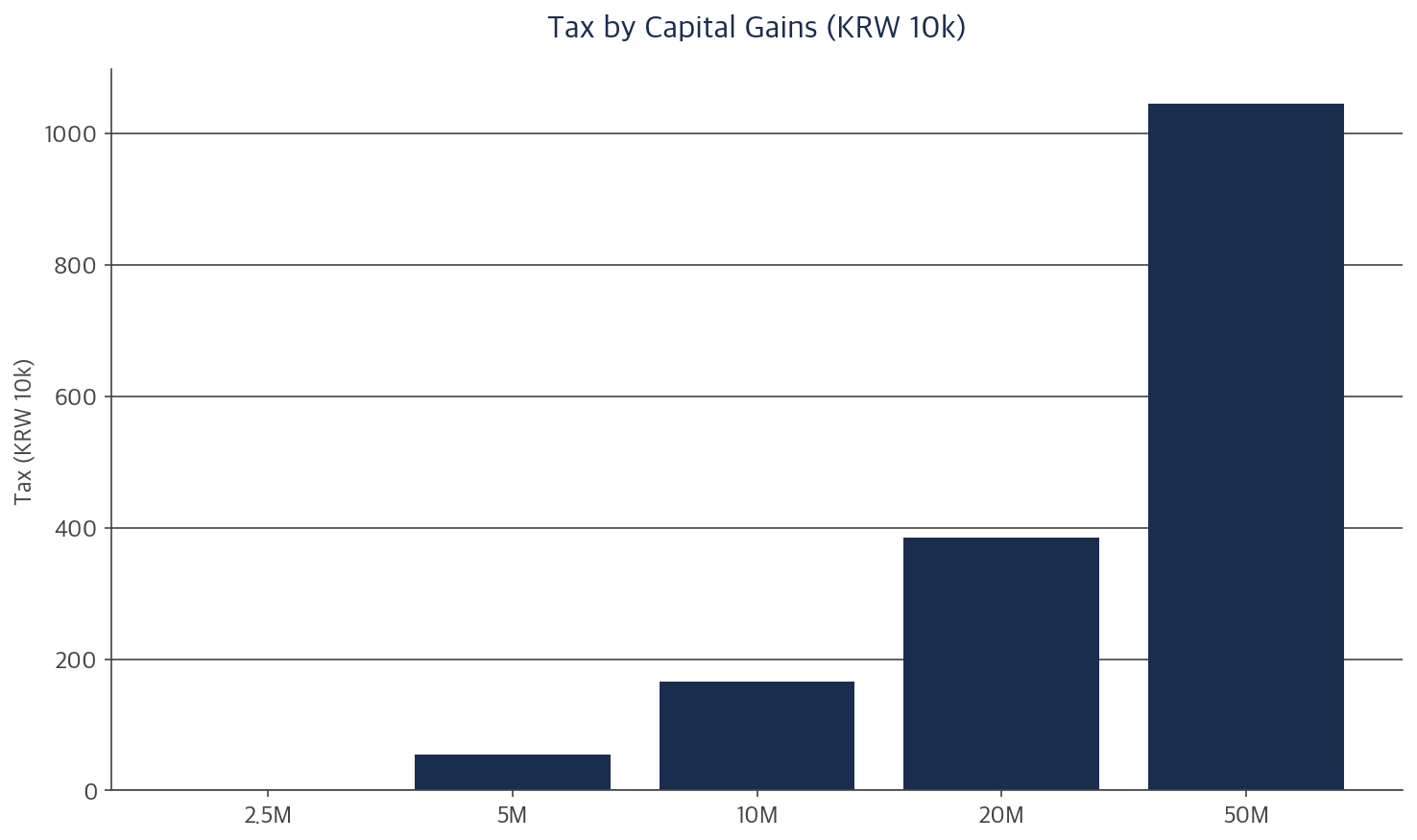
If your annual gain is KRW 2.5 million or less, no tax is due. Just above the threshold, only the excess is taxed at 22%, not the full amount. A common strategy is to realize a bit of profit at year-end on winners you plan to keep — resetting the cost basis and using up that year’s KRW 2.5 million deduction instead of letting unrealized gains pile up for one massive taxable sale later.
Exchange rate and cost basis matter
Foreign stock gains are calculated in Korean won, not dollars. The exchange rate on the purchase date and the sale date each converts the trade into won, so the same dollar profit can trigger a very different stock tax bill depending on currency movements. The capital gains report provided by your broker usually handles this automatically, but if you split holdings across multiple brokerages, you need to sum the reports yourself before filing.
Dividend Tax 15.4% Is Not Always the Final Word
The second pillar of foreign stock tax — dividends — is taxed in two stages. The source country withholds first, then Korea compares that rate with its own and collects only the difference. If the foreign rate equals or exceeds Korea’s, no additional Korean dividend tax is levied (beyond the local surtax).
Withholding rates by country
| Country | Source withholding | Additional Korean tax |
|---|---|---|
| United States | 15% (Korea-US treaty) | Only 1.4% local surtax |
| China | 10% | Balance up to Korean 15.4% |
| Japan | 15% | Only 1.4% local surtax |
| Hong Kong / Singapore | 0% | Full 15.4% in Korea |
For example, a USD 100 dividend from a US stock: the US withholds USD 15 before the remaining USD 85 reaches your Korean brokerage account. Korea then withholds a 1.4% local surtax, roughly USD 1.19, leaving you with about USD 83.81. Because the US rate (15%) already exceeds Korea’s 14% dividend tax, no additional 14% is applied.
Aggregation above KRW 20M
Dividend stock tax withholding is the final step for most investors, but if your combined interest and dividend income exceeds KRW 20 million in a year, the excess is added to your other income and retaxed at progressive rates (6%–45%). High earners can end up with a much higher effective rate than the flat 15.4%, so if your foreign dividends are substantial, check your year-end financial income before December to plan ahead.
The May Filing Calendar — What to Do and When
Foreign stock tax filing is concentrated in May. Both capital gains and aggregated income tax returns are filed between May 1 and May 31. There is no separate quarterly filing — the May final return is the only obligation for capital gains.
- Step 1 (Jan–Apr): Download last year’s capital gains report from your broker’s HTS or mobile app. Most major Korean brokerages offer a dedicated “Foreign Stock Capital Gains Tax Report” menu.
- Step 2 (late Apr): If you used multiple brokerages, aggregate the reports to compute total gains. Subtract the KRW 2.5 million deduction to arrive at your taxable base.
- Step 3 (May 1–31): File and pay through HomeTax (hometax.go.kr) under “Filing/Payment → Capital Gains Tax → Foreign Stocks.” Some brokers offer an assisted filing service that pre-fills the form.
- Step 4 (if needed): If your total financial income (including dividends) exceeded KRW 20 million, file the aggregated income tax return alongside capital gains, also in May.
Missing the May 31 stock tax deadline triggers a 20% non-filing penalty plus late-payment interest of roughly 9.125% per year. The NTS already receives transaction data from your broker, so under-reporting is easy to detect. Filing is better than hoping the stock tax is small enough to slip through.
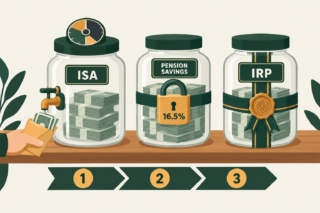
Three Ways to Reduce Your Foreign Stock Tax
1. Use the KRW 2.5M deduction every year
The basic deduction resets each calendar year. Selling several years of accumulated gains in one sitting concentrates the tax burden. A steadier approach is to sell a slice of winners at year-end to use up that year’s KRW 2.5 million, then repurchase. The cost basis resets higher, which shrinks the taxable gain on the eventual final sale.
2. Offset winners with realized losses
Losses realized in the same year are netted against gains. If stock A produced KRW 8M in gains and stock B produced KRW 3M in losses, your taxable gain is KRW 5M. Long-held losers can be cleaned up in a year with big winners to bring the base down. Note that foreign stock capital losses do not carry forward to future years, so they only help if realized in the same calendar year as the gains.
3. Gift to spouse or children to reset cost basis
Gifting heavily appreciated stocks to a spouse resets the cost basis to the market price on the gift date (subject to the deemed-acquisition rule — if the recipient sells within one year, the original owner’s cost basis is used). Spouse gifts up to KRW 600 million over ten years are tax-free, so there is real room to work with. Because the rules change often, large transfers warrant a conversation with a tax professional.
Frequently Asked Questions
Do overseas ETFs follow the same rules?
Yes. ETFs listed on foreign exchanges face the same 22% capital gains tax and 15.4% dividend withholding. However, a Korean-listed ETF that tracks a foreign index is classified as a domestic stock-type ETF — it has only the 15.4% dividend tax, no capital gains tax. Same S&P 500 exposure, very different stock tax treatment depending on where the ETF is listed.
Are FX gains taxed too?
Pure foreign-exchange gains for individuals are not taxed on their own. But because foreign stock gains are calculated in won, a rising dollar can create a taxable won gain even when the dollar profit is unchanged. The reverse also happens — a dollar profit can become a won loss if the exchange rate drops.
Can I recover tax already withheld in the US?
Not as a refund, but it is credited against your Korean dividend tax through the foreign tax credit. If the US withheld 15% on your dividend, Korea treats that as already paid and does not re-levy the same tax. The broker reports this automatically, so no separate application is needed.
What happens if I do not file?
Non-filing triggers a 20% penalty (40% for willful non-filing) plus late-payment interest. The NTS cross-checks broker data, so under-reporting is usually caught. If you missed a past year, submitting a late return as soon as possible minimizes the penalty rather than waiting for an audit.
Wrapping Up
Foreign stock tax looks complicated, but it reduces to two ideas. Capital gains above KRW 2.5 million per year are taxed at 22% via a self-filed May return, and dividends are withheld at 15.4% unless your total financial income passes KRW 20 million and pushes you into aggregated taxation. Once those two pillars click, every other rule is just a variation on them.
A good habit late in the year is to pull the “Foreign Stock Capital Gains Report” from your broker app and check your expected stock tax. An early look leaves time to use the KRW 2.5M deduction, harvest offsetting losses, or plan a spouse gift if needed. For complex situations — large dividends, gifting strategies, overseas work history — a tax professional is worth the fee.
Related guides: dividend investing in Korea 2026 · how to invest in the SpaceX IPO from Korea
This article is for informational purposes only and does not constitute investment advice or tax consultation. Tax rules change frequently; always confirm current requirements with the National Tax Service (NTS) or a qualified tax professional before filing.