Your salary comes in every month, but your account balance never seems to grow. If that sounds familiar even after months of trying to budget, the rule most often recommended is the 50-30-20 budget rule. This guide explains where the rule comes from, how to apply it to a Korean salary after the usual deductions, and how to adjust it when housing costs are heavy — which is the case for many residents in Korea.
Where the 50-30-20 Budget Rule Comes From
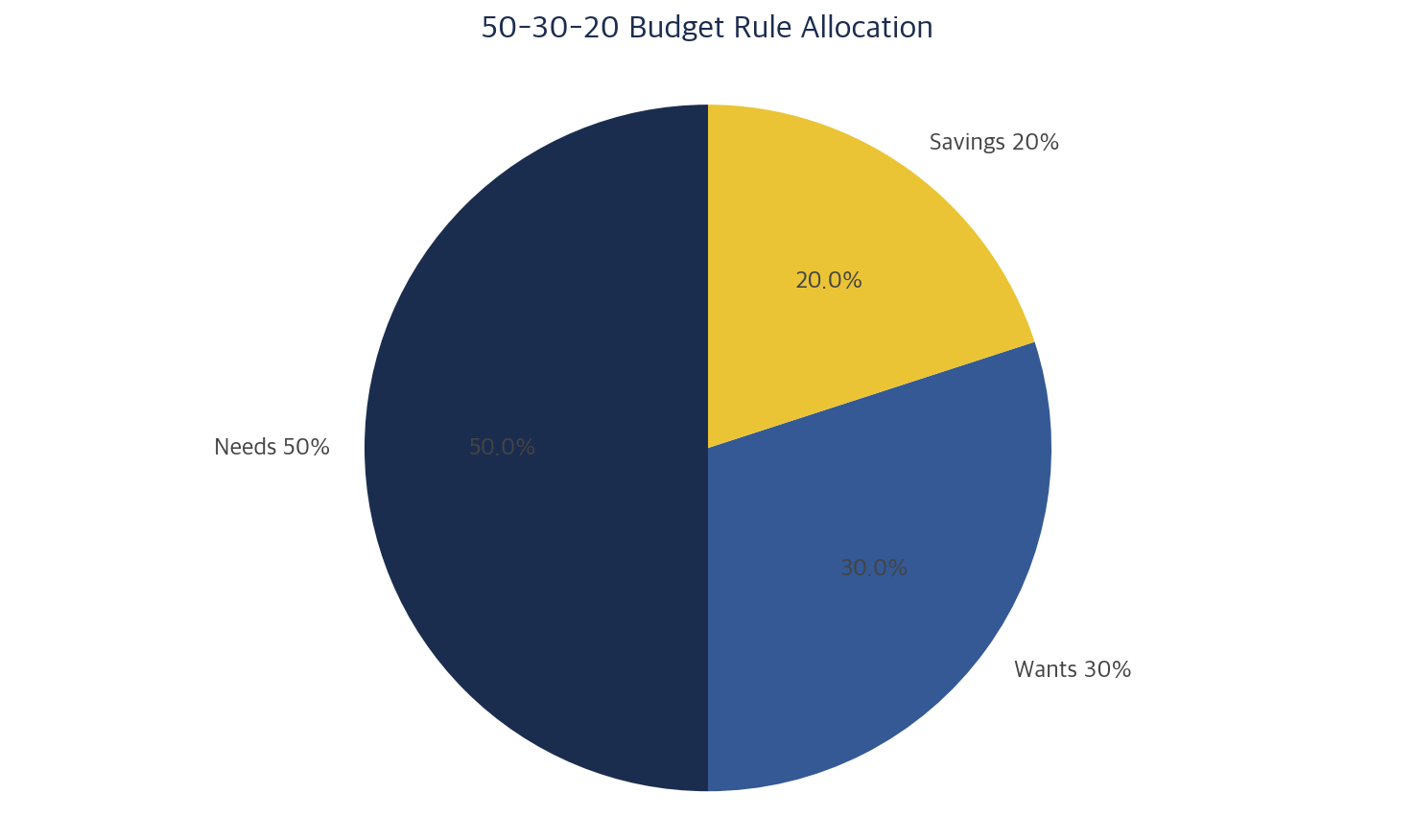
The 50-30-20 budget rule was popularized by Elizabeth Warren (later a U.S. senator and presidential candidate) and her daughter Amelia Warren Tyagi in their 2005 book All Your Worth: The Ultimate Lifetime Money Plan (published in Korea as 맞벌이 부부의 경제학). The structure is simple:
- 50% Needs: Rent and utilities, basic food, transportation, telecom, essential insurance, public utility bills — things you cannot stop paying without disrupting daily life.
- 30% Wants: Dining out, cafés, shopping, hobbies, travel, subscriptions — things that can be cut without harm.
- 20% Savings, investing, debt repayment: Emergency fund, savings accounts, pension savings, ISA, stocks and ETFs, loan principal — anything that builds future wealth.
The percentages are typically applied to after-tax take-home pay. For Korean salaries, that means the amount that actually lands in your account after the 4 social insurance contributions and income/local tax are withheld — not the gross monthly salary.
The point is not the exact percentages — it is the separation of money into three clear buckets: Needs, Wants, Savings. Even adjusted versions of the 50-30-20 budget rule work as long as the buckets stay separate.
Applying the 50-30-20 Budget Rule: Start with Your Take-Home Pay
Before applying the 50-30-20 budget rule, you need to know your actual take-home pay — the amount left after Korea’s 4 social insurance deductions (national pension, health insurance, long-term care, employment insurance) and income/local tax. Rough 2026 estimates:
| Gross annual salary | Gross monthly | Approx. take-home | 50/30/20 split |
|---|---|---|---|
| KRW 30M | KRW 2.50M | ~KRW 2.24M | 1.12M / 0.67M / 0.45M |
| KRW 40M | KRW 3.33M | ~KRW 2.93M | 1.46M / 0.88M / 0.59M |
| KRW 50M | KRW 4.17M | ~KRW 3.57M | 1.78M / 1.07M / 0.71M |
| KRW 60M | KRW 5.00M | ~KRW 4.20M | 2.10M / 1.26M / 0.84M |
| KRW 70M | KRW 5.83M | ~KRW 4.83M | 2.41M / 1.45M / 0.97M |
These 50-30-20 budget rule take-home figures are approximate examples. The assumptions are: one dependent (yourself), no children aged 8–20, KRW 200,000 non-taxable meal allowance, 2026 social insurance rates (national pension 4.75% employee share, health insurance 3.595%, long-term care 13.14% of health insurance, employment insurance 0.9%), and the National Tax Service simplified withholding table effective from March 1, 2026. Actual pay varies by non-taxable items, dependents, bonus structure, and employer-specific deductions (union fees, additional welfare contributions). For your real take-home pay, use the JobKorea, Saramin, or Signal Planner 2026 salary calculator with your exact conditions.
50% Needs — What Counts in Korea
Korean salary deductions (4 social insurances and income tax) have already been removed from take-home pay, so you do not include them again inside the 50%. Within the 50-30-20 budget rule, the 50% covers:
- Housing: Monthly rent (월세), maintenance fee (관리비), property tax (자가) prorated monthly. For jeonse loans or mortgages, treat the required minimum monthly payment as Needs (or as Debt-payment within the 50%); voluntary extra principal repayment beyond the minimum belongs in the 20% (savings/debt-reduction) bucket.
- Basic food: Grocery shopping, company cafeteria, staple ingredients. Dining out and delivery apps belong to Wants.
- Transportation: Daily commute by public transit, or essential car costs (fuel, insurance, regular maintenance). Recreational driving is Wants.
- Telecom and internet: Mobile plan, home internet. Streaming, music, and cloud subscriptions belong in Wants by default — only count them as Needs if they serve a clearly essential purpose (e.g., work, study).
- Essential insurance: Real-loss medical insurance (실손의료), car insurance, fire insurance. Savings-type insurance belongs to the 20%.
- Utility bills: Electricity, gas, water if not included in 관리비.
30% Wants — The Fastest Lever to Pull
Within the 50-30-20 budget rule, the 30% is, in plain terms, “money you spend because you want to.” It is also the easiest area to cut when something needs to give.
- Dining out, delivery, cafés: Restaurant lunches, evening meals out, delivery apps, daily coffee.
- Shopping and hobbies: Clothes, cosmetics, accessories, gadgets, games, sports gear.
- Travel and culture: Domestic and international trips, concerts, movies, exhibitions.
- Subscriptions: Extra streaming, music, cloud, e-books.
- Gifts and social events: Group meet-ups, gifts for family or friends, donations.
Within the 50-30-20 budget rule, on a take-home of KRW 4 million, 30% is KRW 1.2 million. Trying to cover dining, shopping, and travel within that amount naturally forces priorities. Many people find it easier to set up a separate card or account for the 30% and let it run dry by month-end.
20% Savings, Investing, Debt — Pay Yourself First
In the 50-30-20 budget rule, the 20% should be transferred out the day your salary lands — before you decide to spend it. Common Korean channels, in rough priority order:
- Emergency fund: 3–6 months of basic living expenses, kept separately. For an emergency fund, capital safety and instant access matter more than yield. Consider a deposit-insurance-covered savings or “parking” account first; money market funds (MMF) can serve as a short-term parking vehicle but are not covered by deposit insurance and can lose value depending on fund performance.
- High-interest debt: Personal credit loans, card loans (카드론), or negative balance accounts (마이너스통장) — pay these down aggressively alongside the emergency fund.
- ISA (Individual Savings Account): Under current rules, annual contribution cap KRW 20M, tax-free profit cap KRW 2M for the General type and KRW 4M for Workforce and Farmer/Fisher types, 9.9% separated tax on excess. The brokerage-type ISA can hold Korean listed stocks and ETFs; available products vary by ISA type (brokerage/trust/discretionary) and by financial institution. What some press outlets call the “Super ISA” (Productive Finance ISA) reform proposal is separate from the current rules — its launch and detailed terms are not finalized.
- Pension savings (연금저축) and IRP: Pension savings alone qualifies for a tax credit up to KRW 6M per year; combined with IRP and other workplace pension accounts, the cap rises to KRW 9M per year. Long-term saving plus tax relief — but early closure triggers a 16.5% other-income tax claw-back on previously credited amounts. Start with an amount you can comfortably maintain long-term.
- Housing subscription savings (주택청약종합저축): Earns priority points for housing subscription. Under current rules, the housing-savings income tax deduction allows up to KRW 3M of annual contributions, with 40% (up to KRW 1.2M) deductible. Eligibility: gross salary ≤ KRW 70M, housing-less head of household (or in some cases spouse). A worthwhile option to consider for housing-less employees who plan to buy a home in Korea.
- Regular savings or ETFs: Once the channels above are funded, regular savings products or ETFs can absorb the rest.
- Investment risk note: ETFs, equity funds, and stocks — unlike bank deposits — carry the risk of principal loss. For ISA, pension savings, and IRP, verify the mandatory holding period, the tax penalties for early closure, and product-specific fees and risks before opening.
How to split the 50-30-20 budget rule’s 20% among these six depends on your situation. If you have no emergency fund, item 1 may take most of it. Once that is built, you can spread across ISA, pension savings, the housing subscription account, and ETFs.
50-30-20 Budget Rule: Real-Life Scenarios
Scenario 1. New hire (KRW 35M salary, ~KRW 2.58M take-home, studio apartment)
Profile: 1st-year employee · Seoul studio rental · no dependents · little to no emergency fund
| Bucket | Items | KRW (10,000) | Actual % |
|---|---|---|---|
| 50% Needs (target 129) | Rent 50 + maintenance/utilities 15 + food/telecom/transport 50 + basic insurance 3 | 118 | ~46% |
| 30% Wants (target 77) | Dining/cafés/shopping/subscriptions/social | 88 | ~34% |
| 20% Savings (target 52) | Housing subscription 10 + emergency fund 30 + ISA 12 | 52 | 20% |
Comment: Within the 50-30-20 budget rule, Needs is brushing against the 50% ceiling, so do not stretch into pension savings or ISA early — building a 3-month emergency fund is priority one. Once that is in place, gradually shift more of the 20% into ISA.
Scenario 2. Mid-career employee (KRW 55M salary, ~KRW 3.88M take-home, lives with parents)
Profile: 5 years’ experience · lives with parents (no rent) · 6-month emergency fund secured · entering wealth-building phase
| Bucket | Items | KRW (10,000) | Actual % |
|---|---|---|---|
| 50% Needs (target 194) | Household contribution 60 + food/telecom/transport 50 + insurance 10 | 120 | ~31% |
| 30% Wants (target 116) | Dining/shopping/travel/hobbies/subscriptions | 148 | ~38% |
| 20% Savings (target 78 → can expand) | Housing subscription 10 + pension savings 30 + ISA 60 + stock ETFs 20 | 120 | ~31% |
Comment: Under the 50-30-20 budget rule, this is a golden window with low housing costs. Push the savings ratio from 20% to 30% as an accelerated wealth-building phase. Building a seed before marriage or independent housing helps absorb future housing-cost shocks.
Scenario 3. Dual-income couple (combined KRW 7M take-home, jeonse, one child)
Profile: 7 years’ marriage · jeonse (jeonse loan) · one child · no elderly-parent support burden
| Bucket | Items | KRW (10,000) | Actual % |
|---|---|---|---|
| 50% Needs (target 350) | Jeonse loan interest 80 + maintenance 20 + food 80 + telecom/insurance/transport 60 + child education 50 | 290 | ~41% |
| 30% Wants (target 210) | Dining/travel/shopping/culture/family events | 270 | ~39% |
| 20% Savings (target 140) | Pension savings (self) 30 + pension savings (spouse) 30 + housing subscription 20 + ISA 40 + ETFs 20 | 140 | 20% |
Comment: Within the 50-30-20 budget rule, when both spouses use pension savings, the household-level tax credit effectively doubles. With child education and future home-purchase funds rising in parallel, splitting savings across ISA (mid-term) + pension savings (retirement) + housing subscription (housing) creates a balanced three-axis structure.
All Three Scenarios at a Glance
Here is how the 50-30-20 budget rule plays out across the three Korean salary scenarios above:
| Item | Scenario 1 New hire, studio |
Scenario 2 5yr, with parents |
Scenario 3 Couple, 1 child |
|---|---|---|---|
| Take-home / mo | KRW 2.58M | KRW 3.88M | KRW 7M (combined) |
| Housing | Studio rental | Parents’ home | Jeonse (1 child) |
| Rule applied | 50-30-20 tight | 40-30-30 expanded | 50-30-20 standard |
| Top savings priority | 3-mo emergency fund | ISA + pension savings | 3-axis split |
| Key message | Emergency fund first | Accelerate window | Household-level tax |
Korea Reality Check — Housing Costs and the 60-20-20 Variation
The biggest obstacle to applying the 50-30-20 budget rule in Korea is housing. According to a study published in the academic journal Korean Journal of Territory (국토연구) vol. 123, based on a sample of 232 employed young single-person households, respondents reported average monthly housing costs of about KRW 486,000 against an average monthly earned income of about KRW 3.34 million — a housing burden of roughly 16.5%. (Note: this reflects a specific research sample.)
Separately, in a 2023 app-user survey by Station3, operator of the real-estate platform Dabang, about 38% of single-household respondents said they spend 20–30% of monthly income on rent — this is a private survey of app users, not an official statistic. Either way, for studio-renting young adults in the metro area, housing alone fills nearly half of the Needs bucket.
The common adjustment to the 50-30-20 budget rule is the 60-20-20 rule: 60% Needs, 20% Wants, 20% Savings. The principle is “aim for 20% savings, and when Needs grow, cut Wants first to protect it.” That said, during periods when housing, medical bills, or high-interest debt squeeze cash flow, starting at 5–10% and ramping up gradually is more realistic and sustainable. Saving 5% consistently for a year beats setting an unrealistic 20% target and giving up after two months.
| Situation | Needs | Wants | Savings |
|---|---|---|---|
| Standard 50-30-20 | 50% | 30% | 20% |
| Heavy housing costs (60-20-20) | 60% | 20% | 20% |
| Living with parents / surplus (40-30-30) | 40% | 30% | 30% |
| Aggressive debt payoff (50-20-30) | 50% | 20% | 30% |
50-30-20 Budget Rule Execution Checklist
- Find your take-home pay: Plug your conditions into the JobKorea or Saramin salary calculator.
- Classify 3 months of spending: Tag each card transaction as Needs, Wants, or Savings.
- Pick a ratio that fits: Standard 50-30-20, or 60-20-20, 40-30-30, depending on your situation.
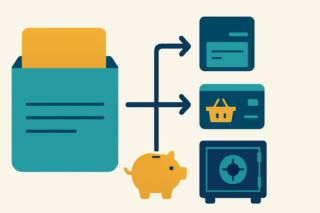
- Split your accounts: Salary account → Needs account, Wants account, Savings account with auto-transfers. Separating cards helps too.
- Move the 20% on payday: Auto-transfer to housing subscription, ISA, pension savings, and regular savings the day after salary lands.
- Monthly review: 5–10 minutes is enough. Just check which bucket overshot.
- Re-tune quarterly: Adjust the ratio if it stays too tight or too loose.
Frequently Asked Questions
Q1. Is it based on gross or net pay?
For Korean salaries, use after-tax take-home pay. The 4 social insurance contributions and income/local tax are already withheld at source — applying the 50-30-20 budget rule to the net amount produces realistic numbers.
Q2. Is the housing subscription account a Need or a Savings?
Within the 50-30-20 budget rule, put it in Savings (20%). The account contributes toward a future home purchase and may qualify for partial income tax deduction. Priorities depend on your subscription plans, household housing-less status, salary threshold (≤ KRW 70M), and cash-flow flexibility — confirm whether you actually qualify for the deduction before treating it as essential.
Q3. I have a lot of debt — should I still save?
Build a small 1–2 month emergency fund first, then concentrate the 20% on high-interest debt (personal credit loans, card loans, negative balance accounts). Paying down expensive debt acts as savings — you are securing future cash flow.
Wrap-up
The 50-30-20 budget rule is a starting point, not a perfect formula. In Korea, 50% may feel tight, or 50% may feel loose if you live with parents. The principle that matters: keep three separate buckets, and protect the savings ratio at a level you can sustain. Set the split once and automate the transfers — and even without tracking every transaction, checking your big spending categories and auto-transfer setup periodically is enough to support wealth-building.
For more on where to direct the 50-30-20 budget rule’s 20%, see our ISA Account Types Guide and 2026 Productive Finance ISA Reform Proposals. For debt repayment strategy, official guidance from the Financial Services Commission and your bank consultation are the safest references.
This article is a general guide to personal financial planning as of May 2026, intended for informational purposes only. It is not investment, legal, or tax advice. Take-home pay and tax benefits vary by individual situation — confirm with the JobKorea or Saramin salary calculator, the Financial Services Commission / National Tax Service, or your bank before acting.