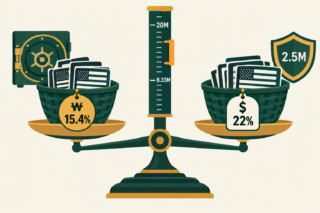
According to the National Tax Service, a significant number of freelancers in Korea who have 3.3% withheld from their income actually get money back through tax filing. The 3.3% withheld often exceeds the actual tax owed. Yet many freelancers delay filing because they assume it’s too complicated or don’t know where to start.
The truth is, tax filing can be done entirely on your own through Hometax. This guide walks freelancers through the entire comprehensive income tax filing process from start to finish.
Who Needs to File?
Comprehensive income tax (종합소득세) is a tax on all income an individual earns during the year. According to the National Tax Service (국세청), comprehensive income includes interest, dividends, business income (including rental income), employment income, pension, and other income.
Freelancers typically fall under business income or other income. If you receive payments with 3.3% tax withheld at source, you are required to complete your tax filing in May. Here’s who must file:
- Self-employed individuals with business income: freelancers, sole proprietors, YouTubers, bloggers, etc.
- Anyone with 3.3% withheld income: lecture fees, manuscript fees, design fees, development fees, etc.
- Employees receiving wages from two or more employers: combined reporting required
- Those with financial income (interest + dividends) exceeding 20 million won per year
On the other hand, employees who work at a single company and have completed year-end tax adjustment do not need to file separately.
Tax Filing Period and Deadlines
The tax filing period runs from May 1 to May 31 each year (as of 2026). Both filing and payment must be completed within this window.
| Category | Deadline |
|---|---|
| Comprehensive income tax filing and payment | May 1 – May 31, 2026 |
| Filers submitting verification statements | May 1 – June 30, 2026 |
| Local income tax filing and payment | Same as comprehensive income tax deadline |
If you miss the deadline, a 20% penalty for non-filing (40% for fraudulent cases) plus late payment surcharges will be imposed. Even if the amount feels burdensome, filing on time and requesting installment payments is far better than facing penalties.
Documents to Prepare Before Tax Filing
Gathering your documents ahead of time makes the tax filing process much smoother. Here are the key documents freelancers need:
- Income records: withholding tax receipts for business income, revenue details by client, tax invoices
- Expense documentation: receipts for business-related spending (equipment, transportation, phone bills, office rent, etc.)
- Income deduction documents: National Pension payment certificates, health insurance premium statements, private pension savings proof
- Tax credit documents: pension savings/IRP contribution proof, donation receipts (medical and education expense credits are only available for certified honest taxpayers)
- Business status report: required for those with rental income
Most of these documents can be accessed through Hometax (홈택스). In particular, check “My Hometax → Payment Statement Submission History” to review your withheld income records.
How to File on Hometax: 5 Steps
Freelancers can complete their tax filing directly on Hometax (www.hometax.go.kr). Here’s how the process works step by step.
Step 1: Log In and Start Your Return
Log in to Hometax using a joint certificate (공동인증서) or simplified authentication. Navigate to “Filing/Payment → Comprehensive Income Tax → Regular Filing.” If the NTS has pre-filled your return (모두채움 신고), review the pre-populated information and make corrections as needed.
Step 2: Select Income Types and Enter Income
Select the income categories that apply to you (business income, employment income, other income, etc.). Freelancer income with 3.3% withholding is classified as business income. Verify the income amounts automatically imported by Hometax, and manually add any income that may be missing.
Step 3: Enter Expenses (Simple Rate vs. Standard Rate)
Deducting business-related expenses from your income reduces your tax bill. There are two methods for calculating expenses in your tax filing:
| Category | Simple Expense Rate (단순경비율) | Standard Expense Rate (기준경비율) |
|---|---|---|
| Eligibility | Prior-year revenue under 36 million won (for freelancers/personal services). New businesses qualify automatically | Prior-year revenue of 36 million won or more |
| Calculation | Revenue × simple expense rate (approx. 60–80% for freelancers, varies by industry) | Major expenses (purchases, rent, labor) by actual receipts + remainder by standard rate |
| Advantage | No documentation needed, calculated automatically | Can be more beneficial if actual expenses are high |
| Difficulty | Easy | Moderate (requires documentation) |
If this is your first time with tax filing as a freelancer, you’ll most likely qualify for the simple expense rate. This method applies an industry-specific rate set by the NTS to calculate your deductible expenses automatically — no receipts required.
Step 4: Apply Deductions and Credits
After subtracting expenses from your income, apply various deductions and credits. Key items available to freelancers include:
- Personal exemption: 1.5 million won for yourself + 1.5 million won per dependent
- National Pension income deduction: full amount of premiums paid
- Health insurance premiums: deductible as business expenses for freelancers (different from the insurance premium deduction for employees)
- Pension savings/IRP tax credit: 13.2–16.5% of contributions (16.5% if comprehensive income is under 45 million won)
- Donation tax credit: 15–30% of donation amount
Many of these overlap with year-end tax deduction items, so if you have experience as an employee, these will feel familiar.
Step 5: Calculate Tax and Submit
Once all information is entered, Hometax automatically calculates your tax liability. If you had 3.3% withheld throughout the year, that amount is subtracted as prepaid tax. If your actual tax is less than what was withheld, you’ll receive a refund. If it’s more, you’ll need to make an additional payment.
After submitting your return, your comprehensive income tax filing is complete. Local income tax (10% of your comprehensive income tax) must be filed and paid separately through Wetax (wetax.go.kr).
Tax Rate Table (2026)
Korea’s comprehensive income tax uses a progressive rate structure, ranging from 6% to 45%, as published by the National Tax Service.
| Taxable Income | Rate | Progressive Deduction |
|---|---|---|
| Up to 14 million won | 6% | — |
| 14M – 50M won | 15% | 1.26 million won |
| 50M – 88M won | 24% | 5.76 million won |
| 88M – 150M won | 35% | 15.44 million won |
| 150M – 300M won | 38% | 19.94 million won |
| 300M – 500M won | 40% | 25.94 million won |
| 500M – 1B won | 42% | 35.94 million won |
| Over 1 billion won | 45% | 65.94 million won |
Let’s look at a concrete example. Suppose freelance designer A earned 30 million won last year, and the simple expense rate for their industry is 64.1%. Deductible expenses would be 30M × 64.1% = 19.23 million won, leaving income of 10.77 million won. After subtracting the personal exemption (1.5M won) and National Pension contributions (approx. 1M won), the taxable base comes to about 8.27 million won.
8.27 million won × 6% = approx. 500,000 won
Meanwhile, the income tax already withheld at 3% over the year was 30M × 3% = 900,000 won. Since the prepaid amount (900K) exceeds the actual tax (500K), designer A would receive a refund of approximately 400,000 won. This is why many freelancers with moderate income end up getting money back through tax filing.
3 Tax-Saving Tips for Freelancers
Here are practical strategies to reduce your tax bill when filing.
1. Keep Thorough Expense Records
All business-related spending can be claimed as deductible expenses. Laptops, software subscriptions, office rent, transportation, and phone bills all qualify. Use a dedicated business card or bank account for these payments so documentation is built automatically. When you move from the simple rate to the standard rate, having more documented expenses works in your favor during tax filing.
2. Contribute to Pension Savings and IRP
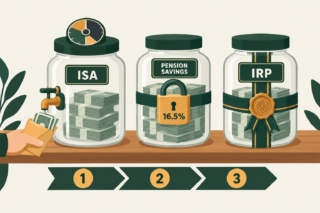
Contributions to pension savings (연금저축) and IRP accounts qualify for tax credits of 13.2–16.5% on up to 9 million won per year combined. This directly reduces your tax bill. For a detailed comparison, see our Pension Savings vs IRP guide.
3. Tax Accountant Fees Are Deductible
If your income is above a certain level, hiring a tax accountant (세무사) can be worthwhile. Accountant fees typically range from 100,000 to 300,000 won, and this cost itself is deductible as a business expense. For complex income situations, professional help during tax filing can maximize your savings.
Frequently Asked Questions
I already had 3.3% withheld — do I still need to file?
Yes. The 3.3% withholding (3% income tax + 0.3% local income tax) is a prepayment, not your final tax. Think of it as a deposit. Through your May tax filing, you settle the actual amount owed. Depending on your total income and deductions, you may owe more or receive a refund.
Can I get a refund if my income was low?
Yes. If your actual tax liability is lower than the 3.3% already withheld, you’ll receive the difference as a refund. This is especially common for those with high simple expense rates or significant deductions. However, if you don’t file, you can’t get a refund — so always complete your tax filing even if your income was small.
What happens if I miss the deadline?
You can still file late, but you’ll face a 20% non-filing penalty plus late payment surcharges that increase over time. The sooner you file after missing the deadline, the lower the penalties. Don’t let a missed deadline prevent you from filing altogether.
Final Thoughts
Comprehensive income tax filing is both an annual obligation and an opportunity for freelancers — an opportunity to reclaim overpaid taxes. The 3.3% withheld throughout the year is just a prepayment, not the final bill, so filing is how you settle the actual amount. If you qualify for the simple expense rate, the entire process on Hometax takes just 10–20 minutes. Don’t put it off this May — file it yourself and see if you’re due a refund.
Start by logging into Hometax and checking “My Hometax → Payment Statement Submission History” to review last year’s income.
This article is for informational purposes only and does not constitute investment advice or tax consultation. For specific tax matters, please consult a qualified tax professional.