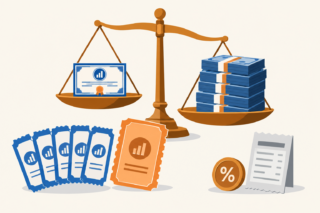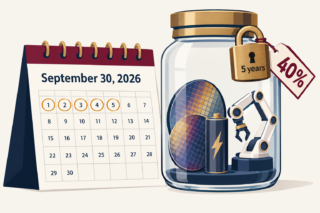
“I want a stream of money landing in my account every month” is a goal most working adults share. The most direct way to build that kind of cash flow from the stock market is dividend investing — and starting January 1, 2026, Korea’s tax code is rewriting the math in favor of dividend investors. A new law that passed the National Assembly on December 2, 2025 introduced separate taxation on dividend income from qualifying high-payout companies, effective immediately for three years (2026–2028). This guide is a 2026-current walkthrough of dividend investing in Korea: how the new tax rules work, what to look for, how to build a monthly-income portfolio, and which mistakes burn first-time investors. It is a roadmap, not a stock pick.
One-line summary: Korea’s Financial Investment Income Tax (FIIT) was officially abolished in December 2024, so capital gains on stocks remain tax-free for non-majority retail investors. From January 1, 2026, dividend income from qualifying high-payout companies is taxed separately at flat rates of 14% to 30% (15.4% to 33% including local surtax), rather than being lumped into your overall income for graduated taxation up to 49.5%. The result: dividend stocks become structurally more attractive, especially for mid-to-high earners.
What dividend investing is — trading volatility for cash flow
A stock can pay you in two ways: capital gains when you sell at a higher price, and dividends when the company distributes part of its profit to shareholders. Dividend investing emphasizes the second — building a recurring cash inflow regardless of short-term price moves. Because dividends arrive based on the number of shares you own, not the price they trade at, the psychological pressure of holding through volatility is generally lighter than with trading-oriented strategies.
Korea’s dividend culture has historically been weaker than the US, but a 2024 Capital Markets Act amendment let companies set dividend record dates after the dividend amount is declared, ending the “blind dividend” structure that had discouraged retail participation. More Korean companies are moving to quarterly dividends, and the 2026 tax reform is the strongest tailwind retail dividend investors have seen in years.
The 2026 dividend investing tax reset — separate taxation
On December 2, 2025, Korea’s National Assembly passed an amendment to the Restriction of Special Taxation Act introducing separate taxation on qualifying dividend income for three years (January 1, 2026 to December 31, 2028). Under the previous regime, dividends and interest income together above KRW 20 million per year were rolled into your global income and taxed at graduated rates up to 49.5%. Under separate taxation, qualifying dividends are taxed standalone at the rates below.
| Taxable dividend bracket | Base rate | Incl. local surtax | Vs. global-income max |
|---|---|---|---|
| ≤ KRW 20M | 14% | 15.4% | Same as withholding |
| KRW 20M – 300M | 20% | 22.0% | Up to ~10 pp savings |
| KRW 300M – 5B | 25% | 27.5% | Up to ~18 pp savings |
| > KRW 5B (newly added) | 30% | 33.0% | Up to ~16.5 pp savings |
The government’s draft had a 45% top rate and a March 2027 start date, but the legislature lowered the cap to 30%, added the 5-billion-won bracket, and pulled the effective date forward to January 1, 2026 — so the regime is already live as you read this. Not every dividend qualifies, however.
Which companies’ dividends qualify
A company must meet one of two criteria for its dividends to fall under separate taxation:
- Dividend payout ratio ≥ 40% of net income, OR
- Payout ratio ≥ 25% AND total dividend up ≥ 10% YoY — rewards consistent dividend growers
Eligibility is re-evaluated annually based on each company’s payout ratio and growth. Financial holding companies, telecoms, and select refiners/securities firms tend to clear the bar most reliably. Check your portfolio names every February–March against the official disclosure on the KRX dividend information page.
Three dividend schedules every investor should know
Korean dividends come on three different cadences. Knowing when to be on the holder list is the first piece of practical knowledge in dividend investing.
| Type | Frequency | Examples | Notes |
|---|---|---|---|
| Year-end dividend | Annual (Dec close) | Most KOSPI names | Record date Dec 31, paid Mar–Apr |
| Interim dividend | Semi-annual (Jun close) | Samsung Electronics, POSCO Holdings, etc. | Based on 1H earnings, paid around August |
| Quarterly dividend | Quarterly (Mar/Jun/Sep/Dec) | Select large caps | Smoothest cash flow; adoption growing post-2024 reform |
The 2024 Capital Markets Act change freed quarterly dividend record dates from the prior fixed March/June/September month-end constraint — boards can now set the record date after declaring the dividend amount. Adoption is still gradual (KOSPI ~23.8%, KOSDAQ ~36.0% as of 2025), so check each company’s articles-of-incorporation amendment disclosure for whether it has moved to the new structure.
Key timing rule: to receive a dividend, you must buy at least two business days before the record date so settlement registers you as a holder on the record date. Right after, prices typically drop by roughly the dividend amount — the ex-dividend effect — so “it looks cheap right after the dividend” usually just means you’ve waited a full cycle to recoup the gap.
Four reasons not to chase yield alone
Dividend yield (dividend per share / stock price) is the most-cited metric and the most-misused. Picking by yield alone is how investors end up holding companies that cut the dividend the next year.
- Price-fall illusion: when the price drops, yield rises mechanically. Many “10%-yield” names are companies whose business is in trouble, not dividend champions.
- Payout ratio: dividend ÷ net income. Above 100% means the company pays more than it earns — unsustainable. The 30–60% range tends to be safest.
- Consistency: an unbroken 5+ year dividend history is more telling than this year’s yield.
- Cash vs accounting profit: operating cash flow comfortably covering the dividend matters more than accounting net income.
Practical heuristic: yields above 10% are almost always a warning sign in the Korean market. Sustainable high-dividend names in Korea typically top out around 7–9%; anything beyond is usually a temporary illusion from a price crash or a one-off special dividend.
Average yields by sector — Korea 2026
Individual picks come with execution risk, so the table below gives sector-level ranges as a baseline (typical for H1 2026):
| Sector | Average yield | Separate-tax eligibility | Notes |
|---|---|---|---|
| Financial holdings | 5–7% | High (payout 25–35% + growth) | Stable earnings; quarterly/interim adoption rising |
| Telecom 3 | 4–6% | Very high (payout 40%+) | Stable cash flow; quarterly dividends mainstream |
| Brokerage preferreds | 6–9% | Mixed | Earnings volatility; preferred-share discount play |
| Refining / chemicals | 3–6% | Variable | Sector cycle sensitive |
| REITs | 5–8% | Separate regime | Rental income passthrough; check fund-level tax treatment |
| Large-cap industrials | 2–4% | Low | Heavy reinvestment |
Ranges are Q1 2026 averages and vary widely at the name level. REITs follow a separate tax regime because they pass through rental income, so verify the operator’s prospectus for tax treatment before buying.
Dividend ETFs — easier diversification
If picking individual names feels heavy, dividend ETFs are a sensible starting point. The fund manager handles selection and rebalancing, you get exposure to dozens of names in one trade, and many Korean ETFs now distribute monthly.
| Issuer | Representative dividend ETFs | Distribution cycle | Annual fee |
|---|---|---|---|
| Samsung AM (KODEX) | Shareholder Return High Dividend, High Dividend | Monthly (mid- or month-end) | 0.30–0.50% |
| Mirae Asset (TIGER) | KOSPI High Dividend, Dividend Growth | Monthly or quarterly | 0.15–0.45% |
| Korea Investment (ACE) | High Dividend, monthly distribution lineup | Monthly | 0.30–0.50% |
| KB Asset Mgmt (RISE/KBSTAR) | High Dividend, Dividend Growth | Monthly | 0.20–0.40% |
Important caveat: ETF distributions do not qualify for separate taxation. The new rule applies only to dividends paid directly by qualifying corporations. ETF payouts continue to be withheld at 15.4% and counted toward the KRW 20M annual threshold for global-income taxation. ETFs win on diversification and convenience; individual qualifying high-payout stocks win on after-tax yield. For more on ETF mechanics generally, see our ETF investing for beginners guide.
Which account to use — tax comparison
The same dividend can be taxed very differently depending on the account you hold it in. Account choice is the first lever in dividend investing tax optimization.
| Account | Dividend tax treatment | Upside | Trade-off |
|---|---|---|---|
| Regular brokerage | 15.4% withheld; over KRW 20M annual → global income OR separate (qualifying) | Unrestricted | Highest tax exposure |
| ISA | Up to KRW 2M (4M for low-income/youth) tax-free; excess at 9.9% | Tax-free bucket, loss offset | KRW 20M/yr contribution cap, 3-year hold |
| Pension savings | Dividends accumulate tax-free; pension income tax (3.3–5.5%) on withdrawal | Deduction + long compounding | 16.5% penalty for withdrawal before 55 |
| IRP | Same as pension savings + 70% risk-asset cap | Higher deduction limit | No leveraged/inverse products |
For mid-to-high earners, the typical winning combination is: fill the ISA tax-free bucket first → buy qualifying high-payout stocks in a regular brokerage to capture separate taxation → use pension savings/IRP for long-horizon compounding. See our ISA account comparison and pension savings vs IRP guides for the contribution and withdrawal mechanics.
A five-step monthly-income portfolio
To produce something that looks like a paycheck, mix names with different dividend schedules. Below is a starter dividend investing structure for the first KRW 1M to KRW 10M of allocated capital.
- Step 1 — pick the account: ISA first if expected annual dividends are ≤ KRW 2M. Above KRW 10M of capital, run ISA + regular brokerage in parallel.
- Step 2 — core holdings (40–50%): Quarterly-dividend names likely qualifying for separate taxation. 2–3 names from telecoms or financial holdings.
- Step 3 — satellite (20–30%): Semi-annual / year-end dividend stable large caps, e.g., refining/chemicals leaders or REITs.
- Step 4 — dividend ETF (20–30%): One or two monthly-distribution ETFs to smooth the cash-flow calendar. ETF payouts don’t get separate taxation, so this slice is about diversification, not tax efficiency.
- Step 5 — quarterly review: Each quarter, recheck payout ratio, earnings trend, and dividend-date calendar. Drop names with payout ratios above 100% or persistent operating losses.
Five common dividend-investing mistakes
- Chasing yield only: high yield from a price collapse is the trap, not the opportunity.
- Assuming all dividends qualify for separate tax: only companies meeting the 40% payout (or 25% + 10% growth) criteria do — check annually.
- Expecting ETF distributions to get separate tax: they don’t, they remain at 15.4% withholding.
- Ignoring ex-dividend price drops: buying right after the record date isn’t a discount — it’s a future-dividend wait.
- Treating pension-account “tax-free” as absolute: pension accounts defer tax, they don’t eliminate it — pension income tax applies on withdrawal.
First-month checklist to get started
- Days 1–3: Open or confirm an ISA / regular brokerage account. Pension savings/IRP separately if you don’t have them.
- Days 4–7: On the KRX KIND disclosure system or your broker app, review the past 3 years of dividend history for the sectors you care about.
- Days 8–14: Shortlist 2–3 names likely to qualify for separate taxation (payout ratio + growth check).
- Days 15–21: Pick one monthly-distribution dividend ETF (target annual fee ≤ 0.4%).
- Days 22–30: Make first buys at 5–10% of total investable assets. Add the next quarterly dividend dates to your calendar.
Dividend investing is one of the few stock strategies where time is on your side — first buys are best treated as a 6–12 month observation period before scaling. Quarterly reviews beat daily trading by a wide margin.
Closing — dividend investing is an asset you buy with time
2026 is the first year of meaningful structural change for Korean dividend investing. Capital-gains tax uncertainty is gone with the FIIT repeal, after-tax dividend yield is clearer than ever thanks to separate taxation, and the 2024 dividend procedure reform is narrowing the information asymmetry that historically held back retail. If a recurring cash-flow stream fits your temperament better than chasing price swings, this is a reasonable moment to take the first step.
One last reminder: dividend investing is one slice of a balanced portfolio. Build an emergency fund first, anchor with pension and ETF allocations, and let dividend stocks sit on top of that as the cash-flow layer. Don’t bet everything on two or three names — use the five-step core/satellite/ETF structure above. Time is a dividend investor’s strongest ally.
Disclaimer: This article is for informational purposes only and is not a recommendation of any specific stock, ETF, or asset manager’s product, nor is it investment advice. Eligibility, rates, and the term of dividend separate taxation may change with future amendments, and applicability is recalculated annually for each company. Verify with the National Tax Service (Hometax), the Korea Exchange (KRX), and your brokerage’s official notices before trading. Sector-level yield ranges in this article reflect Q1 2026 typicals and do not guarantee any specific stock’s performance.