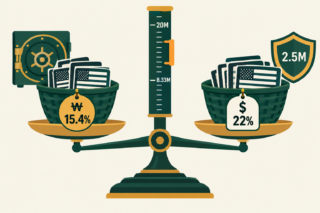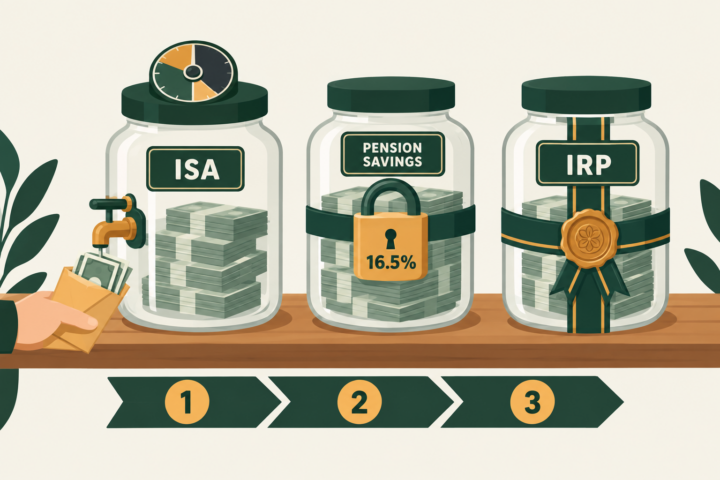
When you suddenly need a lump sum in Korea, which tax-advantaged account should you break first: the ISA, the pension savings account or the IRP? Each one lets money out in a different way, and each claws back a different amount of tax. Between the August ISA reform proposal and the September 1 decision to keep the current rules, 4,750 savers who had not reached three years closed their ISAs at just four brokerages, and 741 of them have since opened a new one and restarted the three-year clock. (※ As of September 2026 · Last updated 2026-09-28)
In short, when you need cash from a tax-advantaged account, look for a partial withdrawal before you close anything, and take out the money that carries no tax first. An ISA lets you withdraw up to the principal you paid in, even before three years, without losing the tax benefit. A pension savings account pays out contributions that never received a tax credit first, tax-free. Closing a pension savings account or an IRP outright, by contrast, puts 16.5% on every credited contribution plus all the gains, which can exceed the tax you got back.
Three ways money leaves a tax-advantaged account
People say “break the account”, but money leaves a tax-advantaged account in one of three ways, and the tax depends more on the way than on the account type.
- Early withdrawal (중도인출): the account stays open and you take out part of it. ISAs and pension savings accounts allow this; an IRP only allows it for reasons set by law.
- Early termination (중도해지): you close the account and take everything. Tax that reverses the benefits you received is charged.
- Special termination or unavoidable withdrawal (특별해지, 부득이한 인출): money comes out for a legal reason such as death, emigration or long-term medical care. If the reason is accepted, you keep the benefit or pay a low rate.
An ISA lets you take out principal; closing it before three years costs 15.4%
The ISA (개인종합자산관리계좌) is a tax-advantaged account that pays its tax-free and low-rate benefits only after a three-year minimum holding period. Before then you can still withdraw up to the principal you deposited and keep the benefit. You cannot take out the gains, and the amount you withdraw does not restore your contribution room (Shinhan Securities ISA guide). Trust-type and discretionary ISAs may cap withdrawals at a share set by the provider, so check the terms first.
The real cost is closing it before three years. The tax-free allowance drops to zero, and taxable income in the account, such as interest and dividends, is taxed at the ordinary 15.4% (local income tax included). After three years, a general ISA shelters KRW 2 million of net profit and a low-income (서민형) or farmer/fisher ISA shelters KRW 4 million, with only the excess taxed separately at 9.9% (KB Securities ISA tax rate guide).
The table below assumes the account earned KRW 3 million of taxable interest and dividends with no losing products. If some products lost money, the tax on an early closure can be higher than shown.
| When you close | How it is taxed | Tax on KRW 3 million of taxable income |
|---|---|---|
| Before three years | Allowance KRW 0, all of it at 15.4% | KRW 462,000 |
| After three years (general) | KRW 2 million tax-free, 9.9% on the other KRW 1 million | KRW 99,000 |
| After three years (low-income, farmer/fisher) | Tax-free up to KRW 4 million | KRW 0 |
On the same KRW 3 million of taxable income, closing a general ISA early costs KRW 363,000 more. Opening a new ISA straight away does not carry over the old holding period; the new tax-advantaged account has to run three full years again (Edaily, September 27). If you were subject to comprehensive financial income taxation in any of the previous three tax years, you cannot open a new one at all.
There are exceptions that protect the benefit even before three years. Special termination covers the holder’s death or emigration, and the following if they occurred within six months before closing: a natural disaster, leaving your job, closing a business, an injury or illness needing three months or more of hospital stay or care, and suspension or bankruptcy of the financial institution (Hana Bank ISA overview).
If one applies, submit proof so the provider processes a special termination rather than an ordinary one; some banks, Hana Bank among them, require you to hand in the documents at a branch. The allowances for each ISA type are laid out in ISA account types.
Pension savings allow partial withdrawals, but credited money comes out at 16.5%
The pension savings account (연금저축) is the easiest of the three to draw from. You can keep it open and take out only what you need, with no conditions on early withdrawal (KB Kookmin Bank pension savings vs IRP). Pension savings insurance (연금저축보험) may handle withdrawals differently under its policy terms, so check with your insurer first. What comes out first is fixed by law, though, and each layer is taxed differently (National Tax Service (국세청) pension income guide).
- Tax-excluded money (과세제외 금액): contributions that never received a tax credit, amounts paid above the credit limit, money paid in during the year you withdraw, and ISA maturity money transferred in that year. It comes out tax-free.
- Deferred retirement income (이연퇴직소득): severance pay moved into the account. Taken out other than as a pension, it bears retirement income tax.
- Credited contributions and investment gains: taken out other than as a pension, they are taxed separately as other income (기타소득) at 15%, or 16.5% with local income tax.
If your tax-advantaged account holds contributions you never claimed a credit for, register them with the provider as uncredited before withdrawing or closing, or they will be taxed. You need a pension contribution certificate (연금납입확인서) from the provider and a certificate of pension deductions and credits (연금보험료 등 소득·세액공제확인서) from Hometax (홈택스) or your tax office.
This matters for foreign employees. If you chose the 19% flat tax rate for a year, contributions from that year may fall into this group, because the flat rate switches off tax credit rules entirely (Restriction of Special Taxation Act, Article 18-2).
A simple calculation shows the damage from closing. Suppose you paid KRW 6 million a year for three years, KRW 18 million in total, claimed the full credit each year, and earned KRW 2 million. Closing the account means other income tax of 16.5% on KRW 20 million, or KRW 3.3 million. Here it is against the tax you got back.
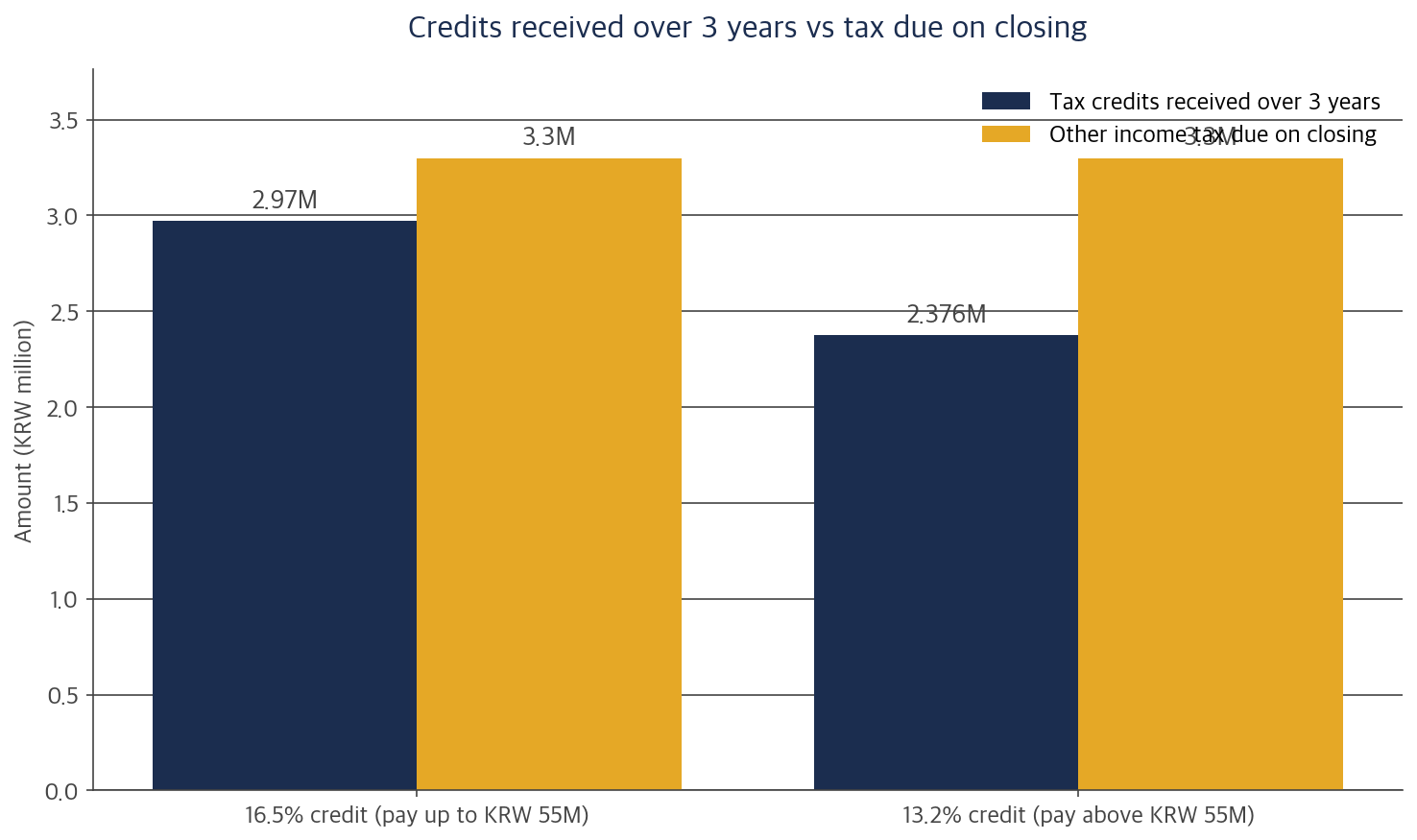
If your total salary is KRW 55 million or less and you received the 16.5% credit, you got back KRW 2.97 million and now pay KRW 3.3 million, KRW 330,000 more. Above that salary, at the 13.2% credit, you got back KRW 2,376,000 and pay the same KRW 3.3 million, a loss of KRW 924,000. The credit rate depended on income, but the closing rate is 16.5% for everyone (National Tax Service pension account tax credit).
The exception is an unavoidable withdrawal. It covers natural disasters, the holder’s death or emigration, three months or more of medical care for you or a dependant, a disaster that requires 15 days or more in hospital, bankruptcy of the holder and similar events, and suspension of the provider.
Submit proof within six months of the date the reason is confirmed, and the money is taxed as pension income at 3.3% to 5.5% by age, local tax included (National Tax Service pension withholding guide). How the two pension accounts differ on eligibility and limits is covered in pension savings vs IRP.
An IRP will not release even part of your money without a legal reason
The IRP (개인형 퇴직연금) is the most tightly locked of the three. You can withdraw part of it only for reasons listed in the Employee Retirement Benefit Security Act (근로자퇴직급여 보장법); without one, the only way out is to close the whole account (KB Kookmin Bank retirement pension early withdrawal guide). The main accepted reasons are these five.
- Buying a home: a holder who owns no home buys one in their own name
- Jeonse or rental deposit: a holder who owns no home needs a deposit for a place to live
- Six months or more of medical care: for the holder, a spouse or a dependant
- Rehabilitation or bankruptcy: a personal rehabilitation order or bankruptcy ruling within the last five years
- Disaster damage: harm to people or property from a natural or social disaster
Beyond these, if you took a loan secured by your retirement pension and fell three or more months behind on repayments because your employer suspended operations or you suffered a disaster, you can withdraw up to the amount needed to repay it (Easy Law (찾기쉬운 생활법령정보) retirement pension guide).
A valid reason does not always mean a lower tax. Medical care, bankruptcy and disasters count as unavoidable under tax law, so credited money and gains get pension income tax, and money from severance pay gets 70% of the retirement income tax. Buying a home and paying a jeonse deposit are allowed withdrawal reasons but not unavoidable ones, so 16.5% still applies (Nongmin Shinmun report). Wedding costs are not a withdrawal reason at all.
Closing an IRP also releases any severance pay held in it. Taken as a pension, severance pay gets a 30% to 50% cut in retirement income tax; taken as a lump sum, the full retirement income tax applies and gains are taxed at 16.5% (KB Kookmin Bank IRP payout guide). The withdrawal order is the same as for pension savings: uncredited money first, then severance pay, then credited contributions and gains.
If you need cash now, draw on your tax-advantaged accounts in this order
My view is clear. Use a tax-advantaged account through withdrawals, not closures, and only work out the cost of closing once the tax-free money has run out. The closing tax falls not on the account’s gains but on every benefit you have received. As the pension example shows, the 16.5% closing rate equals the highest credit rate and is higher still for anyone who received 13.2%.
| Order | Money you take out | Tax | What it costs you |
|---|---|---|---|
| First | ISA principal by early withdrawal; tax-excluded money in pension savings | None | ISA contribution room does not come back |
| Second | Special termination or unavoidable withdrawal (if a reason applies) | ISA benefit kept; pension income tax on pension accounts (70% of retirement income tax on the severance part) | Paperwork within the deadline |
| Third | Closing an ISA before three years | 15.4% on taxable income | A new account restarts the three years |
| Last | Closing pension savings or an IRP | 16.5% on credited money and gains; full retirement income tax on severance pay | Can exceed the refunds you received |
By situation, the call looks like this.
- If what you need fits within your ISA principal: an ISA withdrawal is the cheapest option. The three-year clock keeps running, and moving the balance into a pension account within 60 days of maturity can still raise your credit limit by 10% of the amount moved, up to KRW 3 million.
- If the ISA falls short and you hold pension savings: first find out how much is uncredited or paid in this year. A partial withdrawal within that amount is tax-free; beyond it, 16.5% applies (or retirement income tax on any money moved over from severance pay). Withdraw only what you need from the tax-advantaged account instead of closing it.
- If you left a job, closed a business, needed long medical care or suffered a disaster: before any ordinary closure, check whether the ISA qualifies for special termination and the pension accounts for an unavoidable withdrawal (leaving a job or closing a business counts only for the ISA; pension accounts look at medical care, disasters, bankruptcy and similar events). For the ISA, the event must fall within six months before closing; for pension accounts, proof must reach the provider within six months of the event being confirmed.
- If policy headlines are pushing you to close: do nothing until the law changes. At the proposal stage, no existing rule of your tax-advantaged account changes. The ISA limits in the August 3 proposal were dropped from the September 1 government bill, and in between, 4,750 people at just four brokerages closed ISAs before reaching three years.
Three dates are worth watching. First, the National Assembly review of the tax bill that creates the Productive Finance ISA. Existing ISA rules stay the same under the government bill, and you can decide on the new account after seeing the law that actually passes (Productive Finance ISA explained).
Second, December 31. The pension credit is based on what you pay in during the year, so before a year-end top-up, make sure none of it is money you will need next year. Third, your own ISA’s three-year date. If it is only a few months away, living off a principal withdrawal beats closing.
The most common mistake is believing that closing a pension savings account only means repaying the credits you received. In fact, 16.5% falls on all credited contributions plus the gains, not on the credits. The loss grows if your credit rate was 13.2% and the more your gains have built up. If you keep needing emergency cash, build an emergency fund outside any tax-advantaged account first.
Tax follows how you take the money out, not the account
In the same tax-advantaged account, tax can range from nothing to 16.5% depending on whether you withdraw or close and whether a legal reason applies. Before closing anything, the first step is finding out how much can come out tax-free.
- An ISA allows early withdrawals up to your principal even before three years; closing it before three years taxes taxable income at 15.4%.
- Pension savings allow the freest partial withdrawals of the three, and uncredited contributions come out first, tax-free.
- Closing pension savings or an IRP puts 16.5% on credited contributions and gains, which can exceed the refunds you received.
- An IRP allows partial withdrawals only for legal reasons, and withdrawals for a home purchase or jeonse deposit get no lower rate.
Related reading
- ISA Account Types: 3 Essential Differences You Need to Know
- Pension Savings vs IRP: 5 Essential Differences You Must Know
- How Much Emergency Fund Do You Really Need?
Disclaimer: This article is for information and education only. It does not recommend opening, closing, buying or selling any financial product and does not endorse any specific product. Tax rates and withdrawal rules for each tax-advantaged account reflect National Tax Service guidance and financial institution disclosures as of September 28, 2026; actual tax depends on account type, when you opened it and your income. Before withdrawing or closing, check the estimated tax with your provider and confirm with the National Tax Service directly. All decisions are your own responsibility.